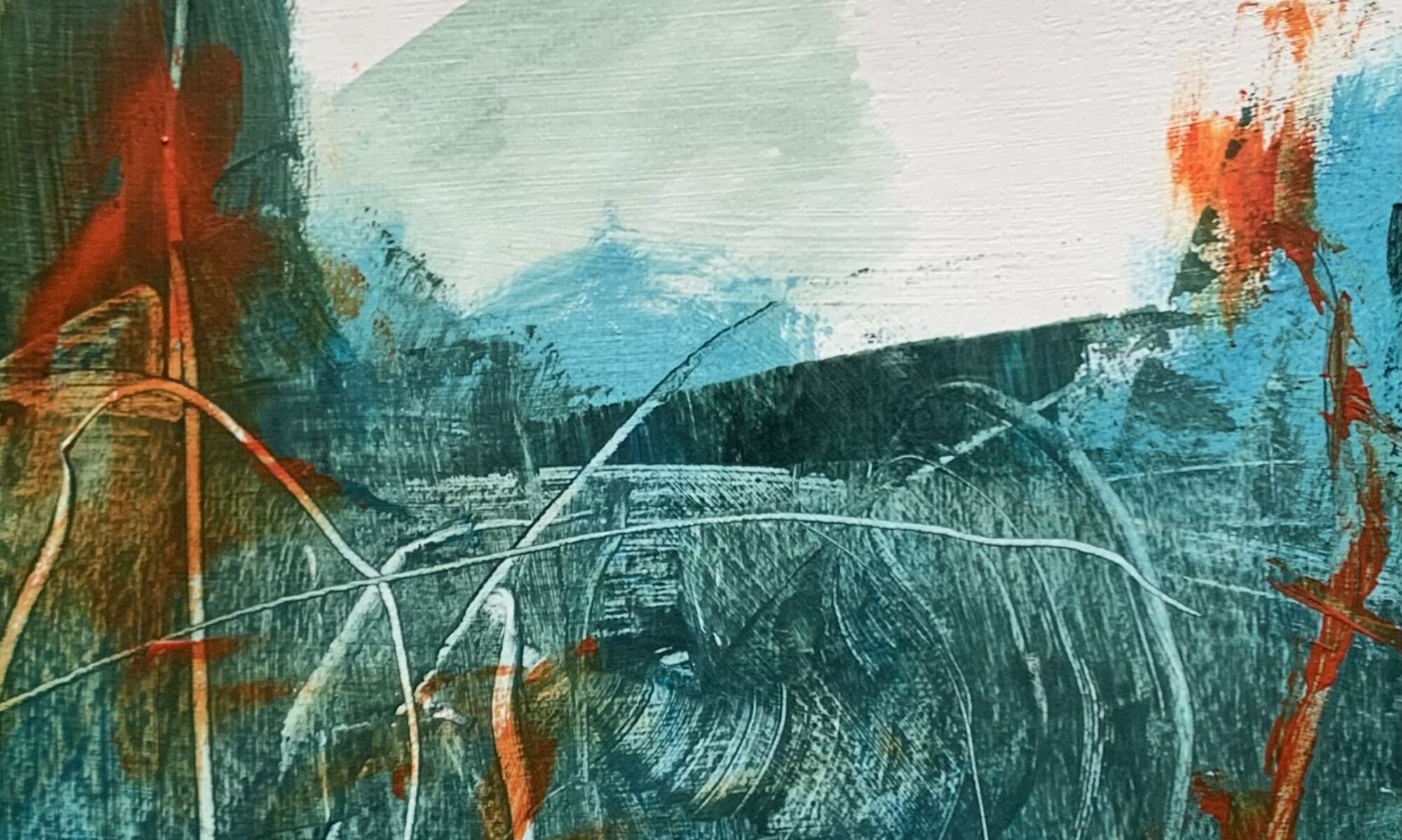
My new album is live on Bandcamp and goes live Sept. 27 on all major streaming platforms. Here are the liner notes I wrote for my Bandcamp page.
My brother doesn’t remember when he proposed the phrase “Avenue of the third five-year plan” as an album title, but I do.
It was in the mid-1990s, and my brother and I played together in the band Lay Quiet Awhile. Inspired by bands like The Church, Rain Parade and The Velvet Underground, we formed the band in the summer of 1986 and built a rabid local following and growing regional success over the course of nine years. We opened for Vic Chesnutt, Hugo Largo, the Violent Femmes and Hootie & the Blowfish, with whom we shared our home of Columbia, S.C. Signed to Daemon Records, we even opened for the Indigo Girls at Radio City Music Hall and mustered a short tour of the U.K.
Despite what we were able to accomplish as a live band, our recorded output was, at least to me, frustratingly thin. During our nine-year run, we released one EP with singer Greg Broom and one cassette EP and a full-length album with singer Danielle Howle.
A friend of ours who became a scholar and analyst of Russian politics must have introduced us to the Soviet-era phrase “Avenue of the third five-year plan,” but it was my brother who applied it to our situation. Despite an enthusiastic fanbase, an independent label and an enviably fresh sound, we were struggling to meet our production quota of new songs that might keep us together and continue to justify our nearly 10-year existence. “Avenue of the third five-year plan” captured the moment perfectly.
The band didn’t meet the moment. Danielle Howle went on to a solo career, and I formed the slowcore band The Verna Cannon.
Fast forward 30 years, and I’ve been making up for lost musical time. I remember vividly how heavy it felt in 1995 to be in a seemingly promising band that was nonetheless plodding along on life support, squandering the momentum we’d had. I’ve seen the decades recede quickly since 1995 — and I’ve also turned the tables on the struggle I once faced to produce new music. Depending on how you count, “Avenue of the third five-year plan” is my ninth album in eight years.
On a superficial reading, every Spot on the Hill record is the same: The music is slow, contemplative, meditative, minimalistic.
For me as an artist, though, there is always evolution — something that I am reaching for or emphasizing that I didn’t reach for or emphasize the last time. Sometimes that is in the sound itself — reaching for a warmer string sound or a fuller piano sound. Sometimes it’s in the instrumentation. Sometimes it’s in the compositional approach. On my “Patterns” album, it was about layering many short rhythmic motifs on top of each other. On “Overtones,” the evolution focused on exploring resonance and overtones as compositional elements.
This record found its own path. I started with piano, as I almost always do, but somewhere along the way I de-emphasized that instrument.
When I released my first Spot on the Hill album in 2018, piano was central to my idea of what the project was about. Given my limited skills on the instrument, that’s somewhat ironic. But I wasn’t trying to prove I’m an accomplished pianist – I’m clearly not – but rather, using the piano as a compositional tool because of its unique and beautiful sonic qualities, the feelings it can conjure and the wide harmonic and melodic palette it offers.
Like most people who write music, I had a lot of half-finished ideas laying around —ideas that I felt had merit, but that hadn’t been fully developed. I decided to finish them, telling myself that I wouldn’t take “no” for an answer. I latched onto snippets of drone, guitar swells, string melodies and a few piano motifs that I had collected through various musical experiments.
The process took plenty of trial and error, but I was ultimately able to sculpt these musical fragments into more fully realized tracks. Sometimes I would take an entire string melody and throw everything away except for one snippet that would form the basis for a steady drone. Other times I would take a short motif I had never fully developed and work on it, extending it and adding new instrumentation. I also brought back the guitar to my music, which had been receding over the course of the past several albums.
As I approach the 10th year of this project, I’m gaining confidence – loosening my compositional approach by becoming less rigid and more intuitive, introducing new sounds and revisiting instruments I had almost left behind. I’m also digging deeper into drone, an area I have explored over several albums but have not made a centerpiece.
The result is an album that traverses several genres: compositional ambient, drone, postrock and neoclassical. To shorthand it, “Avenue of the third five-year plan” de-emphasizes the neoclassical element in my music, amplifies the drone and reintroduces the postrock.
We create our lives from the elements that we have: our resources, our talents, our beliefs, our values. The same is true of music. “Avenue” is a reflection of my personal musical talents and values. I hope you can find some value in it, too.